
Commercial electrical problems rarely arrive without warning. A loose connection warms up for months, a breaker runs near its limit for a whole season, a battery in an exit sign quietly dies. The failure that closes your doors on a Friday night usually started somewhere nobody was looking.
A good maintenance routine splits the work in two: what your own staff can safely check, and what needs a licensed electrician with the right tools. Here is how we would divide it for a Denver Metro business.
Monthly: what your staff can check
None of this requires opening a panel or touching a conductor.
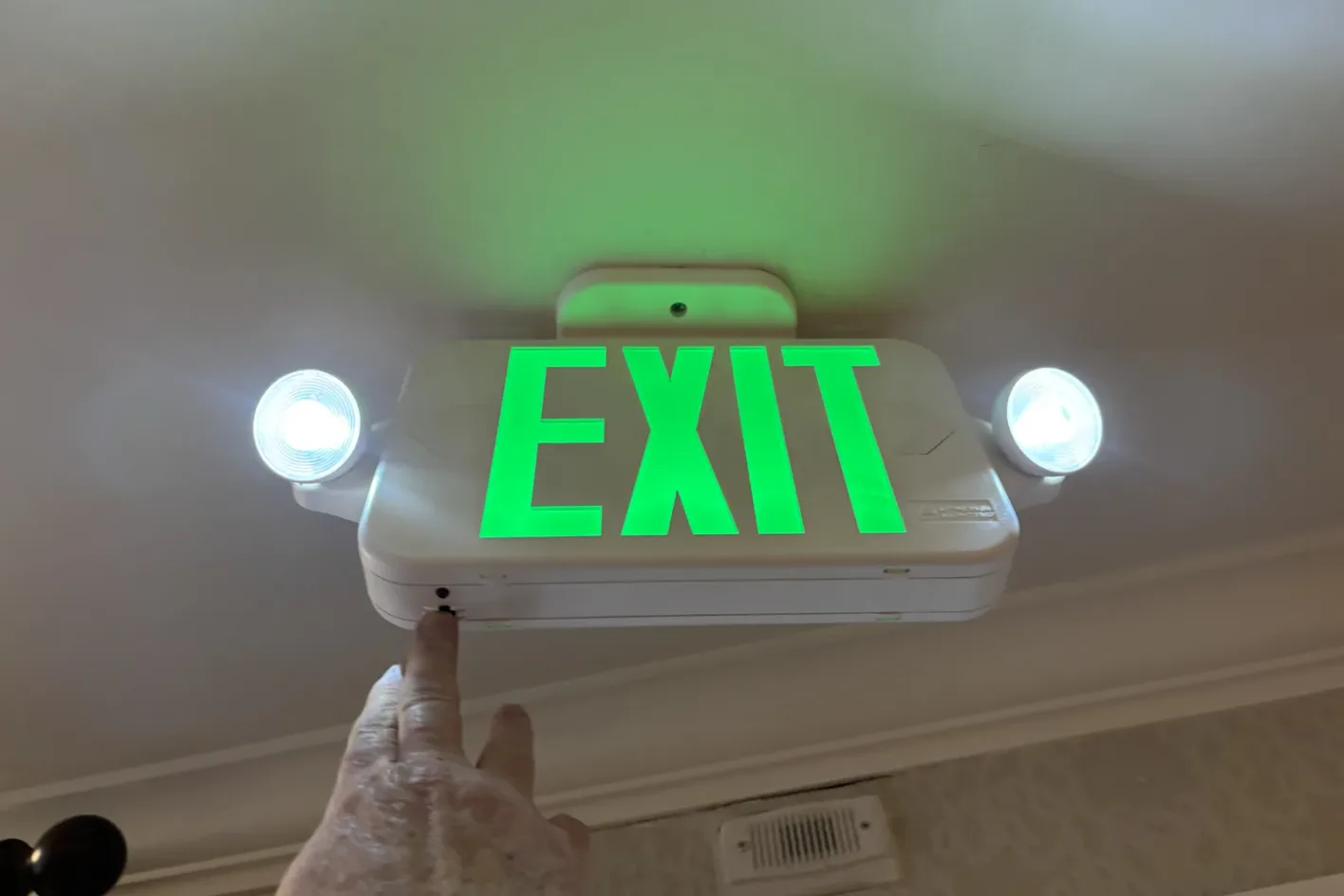
- Emergency lighting and exit signs. Press the test button and confirm the lamps come on. Fire codes based on NFPA 101 call for a short functional test every month and a longer battery test, about 90 minutes, once a year. Your local fire authority sets the exact requirement, so confirm it.
- GFCI protection. Press the test and reset buttons on every GFCI outlet in kitchens, restrooms, and wet areas. Replace any that do not trip or do not reset.
- Panel access. Keep the area in front of every panel clear. The code expects about three feet of working space, and a pallet parked against a panel is a common violation.
Quarterly: walk the space and use your senses
Look for extension cords used as permanent wiring, power strips plugged into other power strips, and outlets that are discolored or warm. Listen for buzzing at panels or disconnects. Notice any breaker that trips more than once. A single trip after an overload is normal. A breaker that keeps tripping is telling you something, and resetting it again is not an answer.
A burning smell, flickering lights across a whole area, or a panel cover that feels warm are not quarterly items. They are call-now items.
Yearly: what needs an electrician
These jobs need training and instruments, and they are where most of the value is:
- Thermal imaging of panels, disconnects, and major connections while they are under load, which shows hot spots long before anything fails.
- Torque-checking connections to manufacturer specification. Loose connections are the most common cause of commercial electrical failures, and they cannot be seen by looking.
- Load review. Comparing what each panel actually carries against what it was built for, especially if equipment has been added.
- Full emergency lighting test under battery, and verification of GFCI and AFCI protection.
- Transfer switch and generator testing under load, if you have standby power.
- Updated panel directories, so the labels match what the breakers actually control.
Before you add equipment
New kitchen equipment, a fleet of EV chargers, server racks, or a tenant build-out can quietly push a panel past a safe load. A short load calculation before you buy prevents nuisance trips, voided warranties, and a failed inspection later.
Why the paperwork matters
Insurers, building owners, and the authority having jurisdiction all want to see that maintenance happened. A dated record of each inspection, with what was found and what was fixed, is worth far more at renewal time than a verbal assurance. It also makes the next visit faster.
BES builds preventive maintenance agreements around your facility and your hours, and every visit is documented. Because we handle both electrical and HVAC, multi-site operators get one contractor and one point of contact across locations. See our commercial electrical maintenance page for what a plan covers. We serve Greenwood Village, Centennial, Englewood, Castle Rock, and the surrounding metro. To talk through a plan, call (303) 699-1417.