
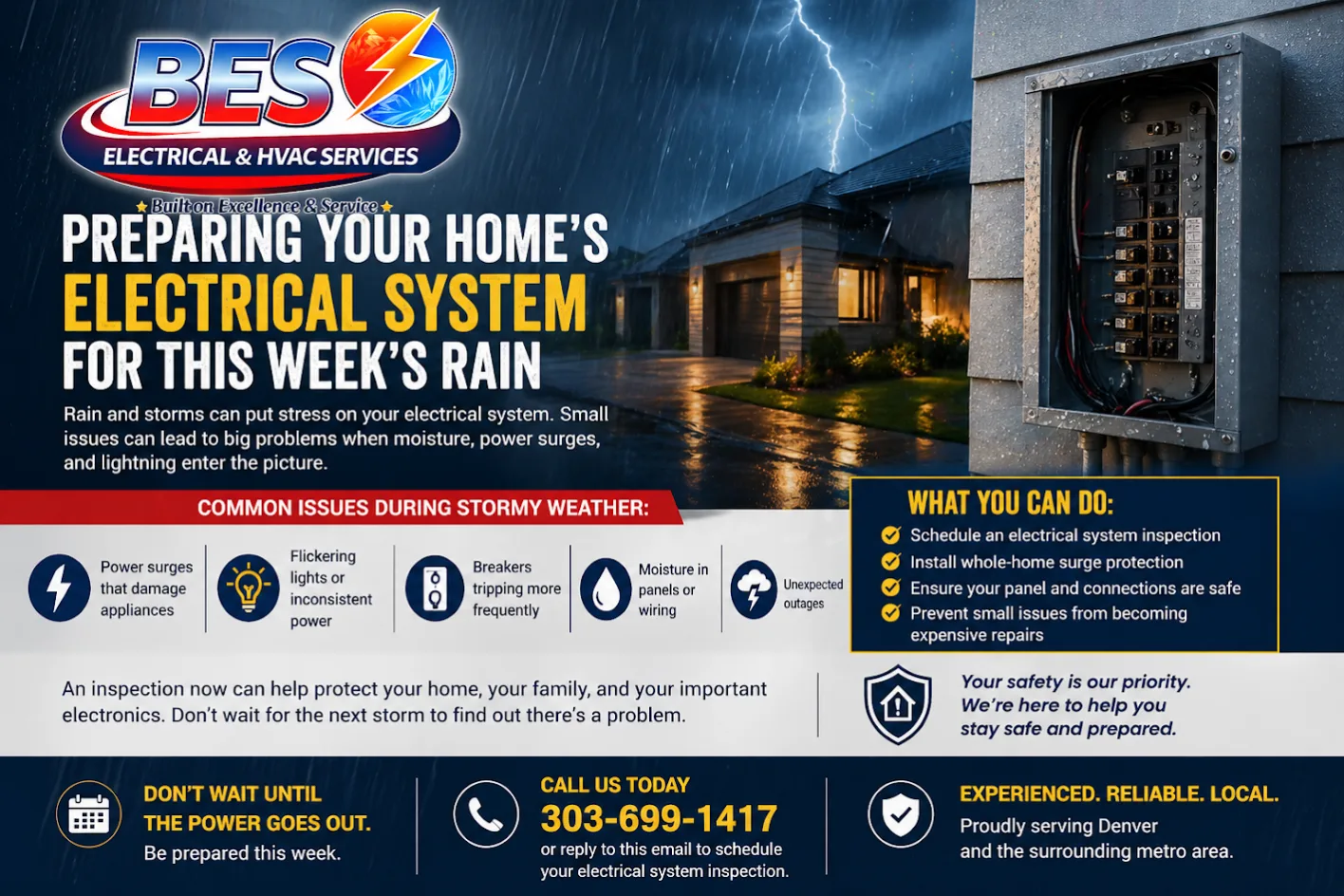
Water and electricity do not mix, and Colorado rain often arrives with lightning, hail, or a downpour heavy enough to flood a window well. A few checks before a storm, and a clear idea of what to do if something goes wrong, keep a wet week from becoming an electrical problem.
Check the outside first
Outdoor outlets should be GFCI protected and have a cover that stays closed over the plug while something is connected. Look for cracked or missing covers, fixtures that have filled with water, and any wiring that is exposed or hanging loose. A GFCI outlet that trips after every rain is doing its job. Moisture is getting in somewhere on that circuit, and it needs tracing, not just resetting.
Check the meter and the service mast where the power comes into the house. If you see water getting into the meter base, a loose mast, or damaged wiring there, do not touch it. Keep away and call. The meter belongs to Xcel, so a problem there is theirs to fix, but we can tell you quickly whether the fault is at the meter or inside your panel.
Think about the basement and the sump pump
If you have a sump pump, test it before the storm by pouring a bucket of water into the pit. Confirm it starts, runs, and shuts off. A pump is only useful if it has power, so it matters which circuit it is on and whether that circuit is protected. A battery backup or a generator keeps the pump running through an outage, which is when it is needed most.
Never wade into standing water to reach a panel, an outlet, or a pump. If water is near any outlet or the panel, stay out and get the power shut off at the source before anyone goes in. Call us or Xcel. A flooded electrical system needs to be inspected before it is turned back on.
Lightning and power surges
A lightning strike nearby does not need to hit your house to damage it. The surge travels through the wiring and can destroy the control boards in your furnace, air conditioner, and appliances in an instant. Plug-in surge strips help for small electronics, but they do nothing for the equipment that is hardwired.
Whole-home surge protection is mounted at the panel and catches the surge before it reaches anything in the house. If you have had equipment fail after a storm, it is worth looking into. See our whole-home surge protection page, or the one for Highlands Ranch.
After the storm
These are signs something got wet or damaged and should be looked at:
- Lights that flicker or dim for no reason, especially if it started after the storm.
- Breakers that trip repeatedly, or a GFCI that will not reset.
- A burning smell, or a panel cover that feels warm or damp.
- Outlets or switches that are discolored or warm to the touch.
Turn off what you can safely turn off and call. If you see smoke, sparks, or flames, call 911 first and leave the house. Our electrical repair page lists the symptoms we diagnose most often, and we dispatch around the clock for emergencies.
The HVAC side of wet and unsettled weather is covered in our post on Denver weather swings and your HVAC system. If you want your electrical system looked at before the next storm, call (303) 699-1417 or request a visit online.