
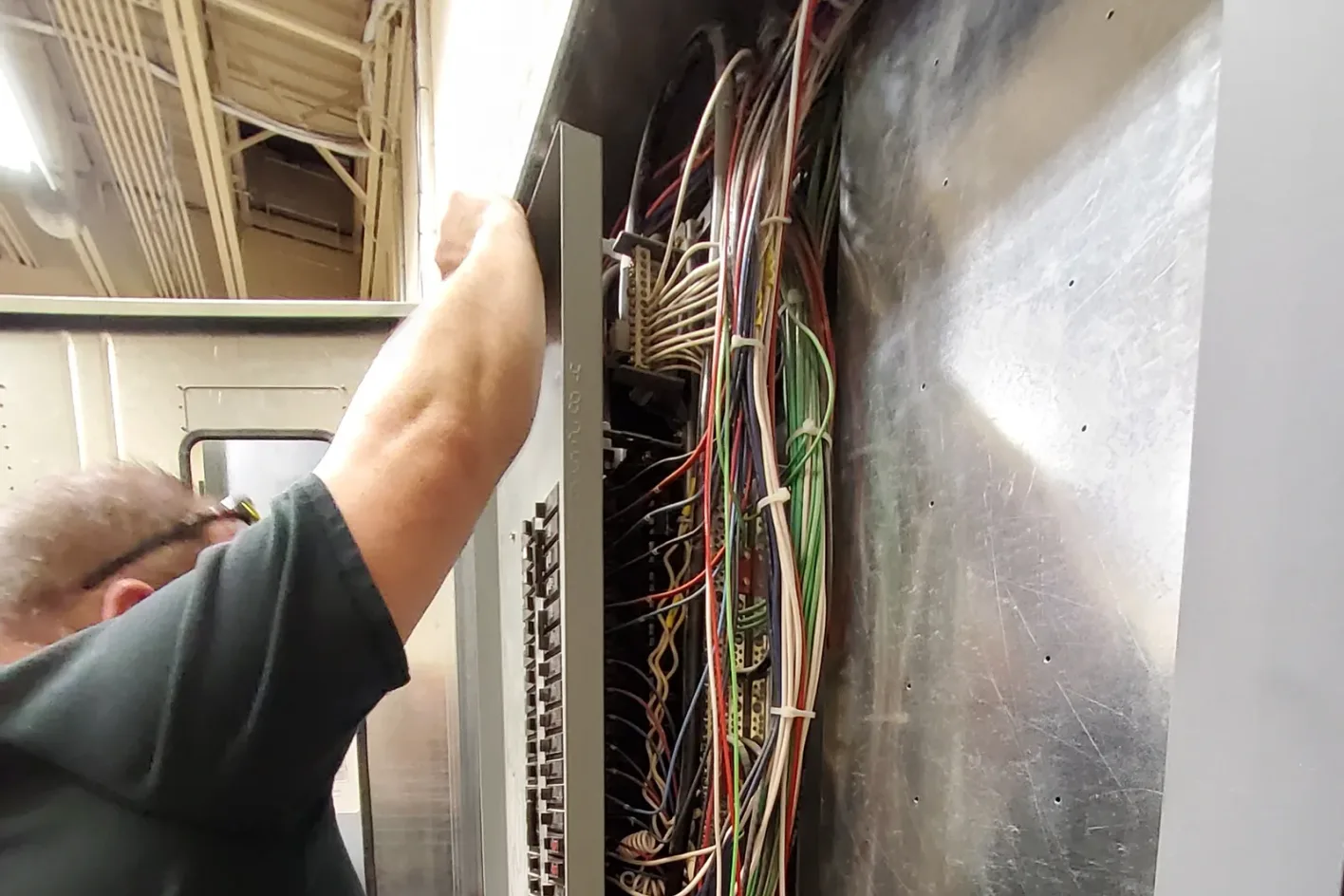
Your electrical panel runs everything in the house, and most people never think about it until a breaker starts tripping or a contractor mentions it during another job. Replacing one is not cheap, so it helps to know the difference between a panel that needs replacing and one that just needs a small repair.
Signs it is time to replace
- You still have a fuse box. Fuse boxes usually mean a 60 to 100 amp service, which is tight for a house with central air, an electric range, and anything with a plug-in car.
- The panel is a Federal Pacific or Zinsco. Both have a documented history of breakers that fail to trip during a fault, and many insurers now charge more or decline coverage for homes that have one.
- Breakers trip often, with no obvious overload. If you cannot run a microwave and a space heater on the same circuit, the panel may be undersized for how you actually live.
- There are scorch marks, a burning smell, or a warm cover. Stop using the panel and call. Do not wait for a convenient week.
- You are adding a big load. A heat pump, an EV charger, a hot tub, or an addition often needs more capacity than an older 100 amp service can give.
Replace or repair?
A single worn breaker is a cheap fix. A panel with damaged bus bars, a recalled brand, or no spare capacity is not, and no amount of breaker swapping changes that. A useful test is whether the problem is one component or the whole design. One bad breaker is a component. A panel with no room left for the circuits you need is a design problem.
If you are not sure which you have, an inspection answers it. We wrote about what a panel inspection checks if you want to know what to expect.
What a panel upgrade costs in the Denver Metro
A standard upgrade from 100 amp to 200 amp service typically runs $2,500 to $4,500. The spread comes from a few things: whether the meter base or the mast needs replacing, where the Xcel service drop comes in, and how much the new panel layout differs from the old one. Replacing a hazardous Federal Pacific or Zinsco panel with a like-sized one lands in a similar range.
Get the price in writing after someone has seen the house. A number given over the phone for a panel is a guess, and it tends to move once the old panel is open.
What install day looks like
Most residential panel upgrades are done in a day. The power is off for several hours while the old panel comes out and the new one goes in, and Xcel pulls and resets the meter during the swap. You will want to plan around that: refrigerators will be fine for a few hours, but anything medical or anything that cannot lose power needs a plan.
The permit and inspection are part of the job. A licensed contractor files the permit with your city or county, coordinates the utility, and books the inspection, so you are not managing it. Skipping the permit can put your homeowner's insurance at risk, and it can come up when you sell. Our panel upgrade page explains the steps in more detail.
Why it is worth doing right
A new panel is one of the more useful electrical investments you can make. It removes a safety risk if you have a bad one, and it clears the way for a heat pump or charger without another round of surprises. In older neighborhoods like Englewood and Centennial, where original panels are common, it is often the job that makes everything else possible.
If your panel is showing any of the signs above, call (303) 699-1417 or request a visit online and we will take a look.