
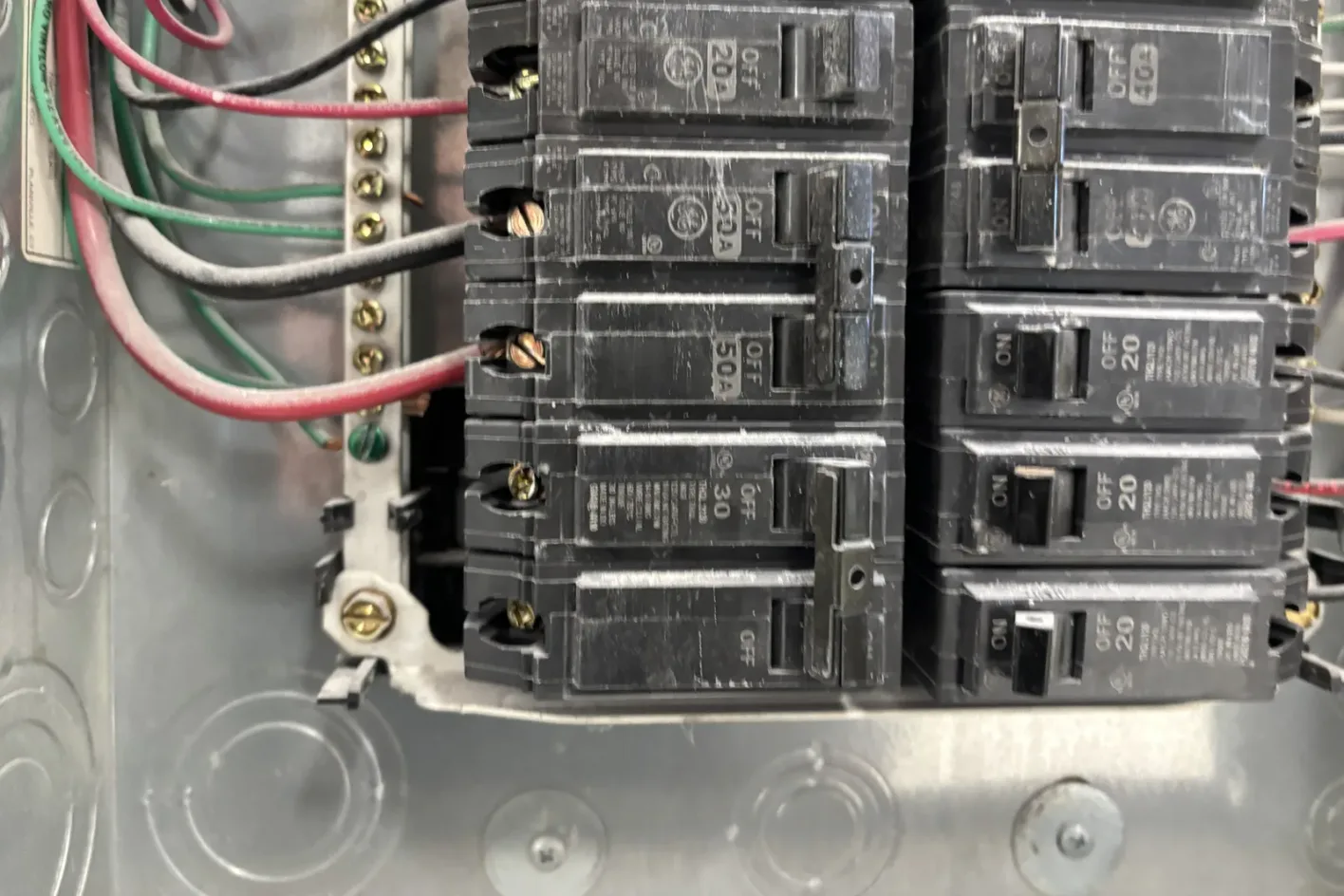
An electrical panel inspection is a trained person taking the cover off your panel, looking at what is actually inside, and writing down what they find. That is the whole idea. What makes one worth paying for is how much they look at and how plainly they explain the result afterward.
Most people ask for one when they are buying a house, selling one, or dealing with an insurance company that wants proof the wiring is sound. Some ask because a breaker keeps tripping and nobody can say why. Here is what a thorough inspection covers, and how to read what comes back.
What gets looked at inside the panel
The inspector removes the front cover and checks everything behind it. The main things:
- Heat damage. Discolored or scorched breakers, burned insulation, or melted plastic around a terminal. Heat is the signature of a loose or overloaded connection.
- Moisture and rust. Stains or corrosion on the bus bars usually mean water is getting in from outside.
- Double-tapped breakers. Two wires clamped under a breaker built for one. It is common in older homes where circuits were added over the years, and it is a classic source of loose connections.
- Wire size against breaker size. A 20 amp breaker feeding wire rated for 15 amps is how wires overheat before anything trips.
- Connections. Whether terminals are tight, and whether the wire ends look clean or darkened.
- Labels and open slots. Whether the panel directory matches what the breakers actually control, and whether any knockouts or openings are missing their covers.
The brand can matter more than the age
Two panel families have a documented history of breakers that fail to trip during a fault: Federal Pacific, usually sold as Stab-Lok, and Zinsco. If your panel is one of them, an inspector will flag it no matter how clean it looks, and many insurers now charge more or decline coverage for homes that still have one.
Age alone is not the verdict. A well-kept panel from the 1990s can be in better shape than a newer one that was added to carelessly.
Service size and room to grow
The inspection also looks at the service itself: how many amps come into the house, and how much of that you are already using. A 100 amp service that was fine in 1975 can be at its limit once you add central air, an electric range, and a car charger. A good report tells you whether there is room to add circuits or whether a larger service is the next step.
If it is a larger service, that work needs a permit and an inspection by the city or county. A licensed contractor pulls the permit and books the inspection, so you are not managing it. Our panel upgrade page covers what that involves.
What an inspection cannot tell you
It sees the panel, the service, and whatever wiring is exposed. It cannot see inside walls. Aluminum branch wiring, used in many homes built from the mid-1960s to the mid-1970s, can often be spotted at the panel and at outlets, but a full picture of hidden splices or old repairs takes more digging.
It is also not the same thing as the city inspection that follows permitted work. That one checks that new work meets code. A panel inspection tells you the condition of what is already there.
When it is worth getting one
Before you buy or sell an older home, when an insurer asks for it, and after a big remodel or addition that put new load on the panel. In older neighborhoods like Englewood and Centennial, where homes from the 1960s and 70s often still have original panels, it is a sensible thing to do before a sale rather than during one.
Some signs should not wait for an inspection at all. A breaker that trips again right after you reset it, a panel that feels warm or buzzes, a burning smell, or lights that dim when an appliance starts all need a technician now. Turn off what you can safely turn off and call. If you see smoke or sparks, call 911 first. Our electrical repair page lists the symptoms we diagnose most often.
What you should get back
BES inspects panels for buyers, sellers, and homeowners dealing with insurance requests, and the result is a written report you can hand to a lender, insurer, or buyer. Findings come back sorted by what is urgent and what can wait, so you can decide what to fix now and what to plan for. Pricing depends on the home, so ask when you book. For homes in our own city, the details are on our Greenwood Village panel inspection page.
We cover Greenwood Village, Centennial, Englewood, and the rest of the south Denver Metro. To get a panel looked at, call (303) 699-1417 or request a visit online. If you are weighing repair against replacement, our earlier post on when to replace your panel goes through the signs.